
Underground
Why an honest underground quote has exclusions in it
Nobody can see what is under your yard. Here is why the good bids say so out loud and the bad ones do not.
Published by Redstar Electric
Brandon Lee Isaac, owner. Oklahoma Unlimited Electrical Contractor, license 00157408.
If you get two bids for underground work and one is a clean single number while the other has conditions written into it, most people assume the clean one is the better outfit.
It is usually the opposite, and here is why.
The problem with dirt
Running service underground means getting a trench from one point to another at the depth the code requires. On paper that is simple. In practice, what is between those two points is completely invisible from the driveway.
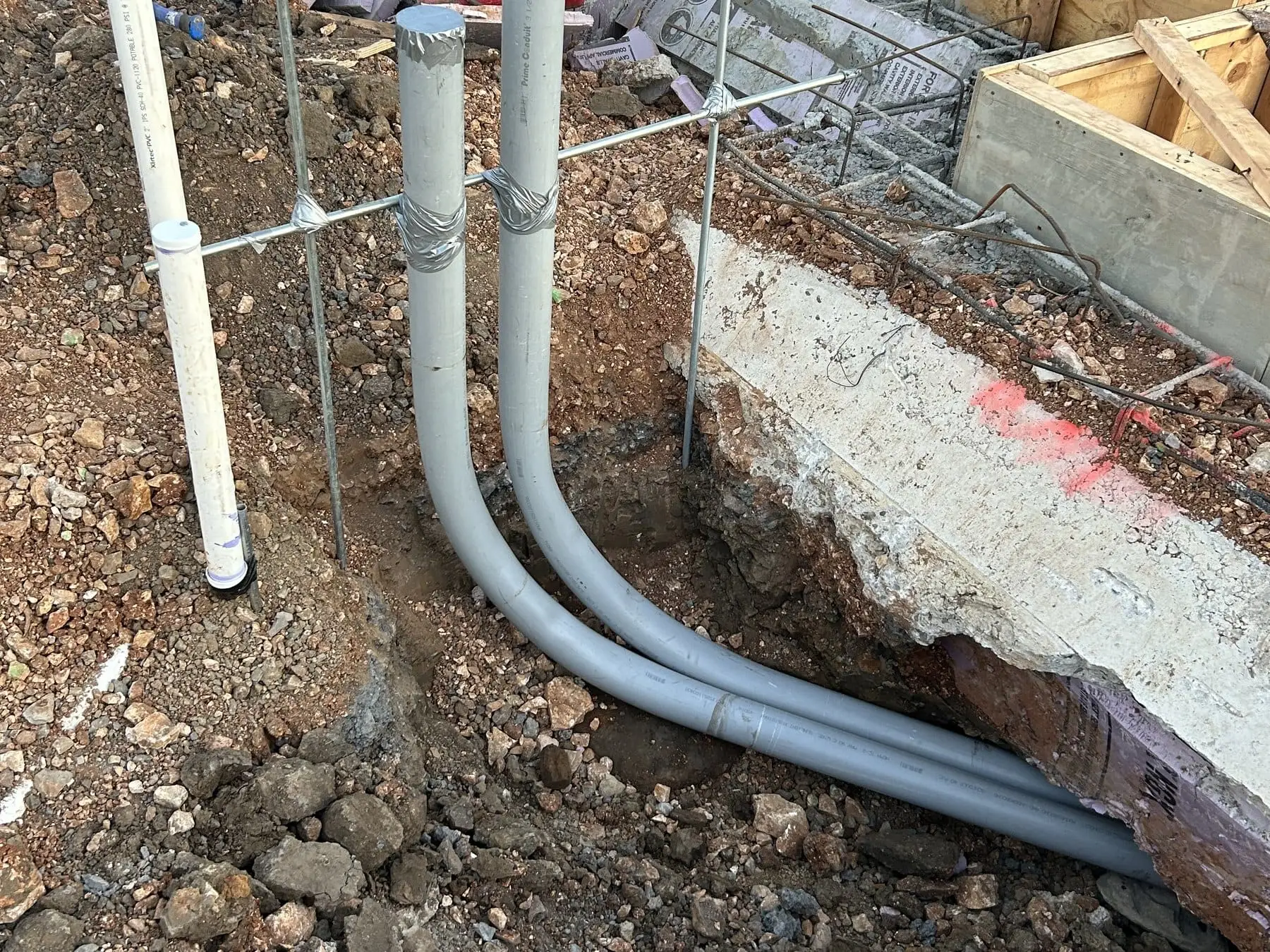
It might be soil the whole way, in which case a trencher walks through it and the job takes the day everyone expected. Or it might be rock, in which case that machine stops and the work becomes something else entirely: breaking, hammering, sometimes bringing in equipment that was never in anyone’s plan.
The electrical scope did not change at all. The ground did.
What that looks like in real money
On one commercial job, the rock excavation alone ran into serious money before a foot of conduit went in the ground. Nobody was careless. The rock was simply there, and no one standing on that lot beforehand could have seen it.
That is the lesson that changes how you write a bid forever.
So what should a bid say
A straight underground bid tells you two things: what the work costs assuming normal ground conditions, and what happens if the ground turns out not to be normal. It names the condition, and it says how it will be handled and priced if it shows up.
That is not a contractor hedging. It is a contractor telling you in advance about the one variable that neither of you can control, so that if it appears you are having a known conversation instead of an argument.
What the clean number actually costs you
A bidder who gives you one confident figure with no conditions has done one of three things.
They have padded the number heavily to cover rock that may not be there, and you pay for it either way. Or they have not padded it, and they will come back mid-job asking for more, which is the change order nobody wants. Or they will eat it, do the work at a loss, and find the difference somewhere else in the job.
None of those three are better for you than being told up front.
What to ask
When you are comparing underground bids, ask each one directly: what happens if you hit rock?
You will learn more from how they answer that question than from the numbers on either page. The right answer is specific, and it was already in writing before you asked.
Got one of these going on?
Describe what it is doing. We will tell you whether it needs somebody out there today or whether it can wait.