
First time
What actually happens when you call an electrician
If you have never hired one, here is the whole process, start to finish, with no mystery in it.
Published by Redstar Electric
Brandon Lee Isaac, owner. Oklahoma Unlimited Electrical Contractor, license 00157408.
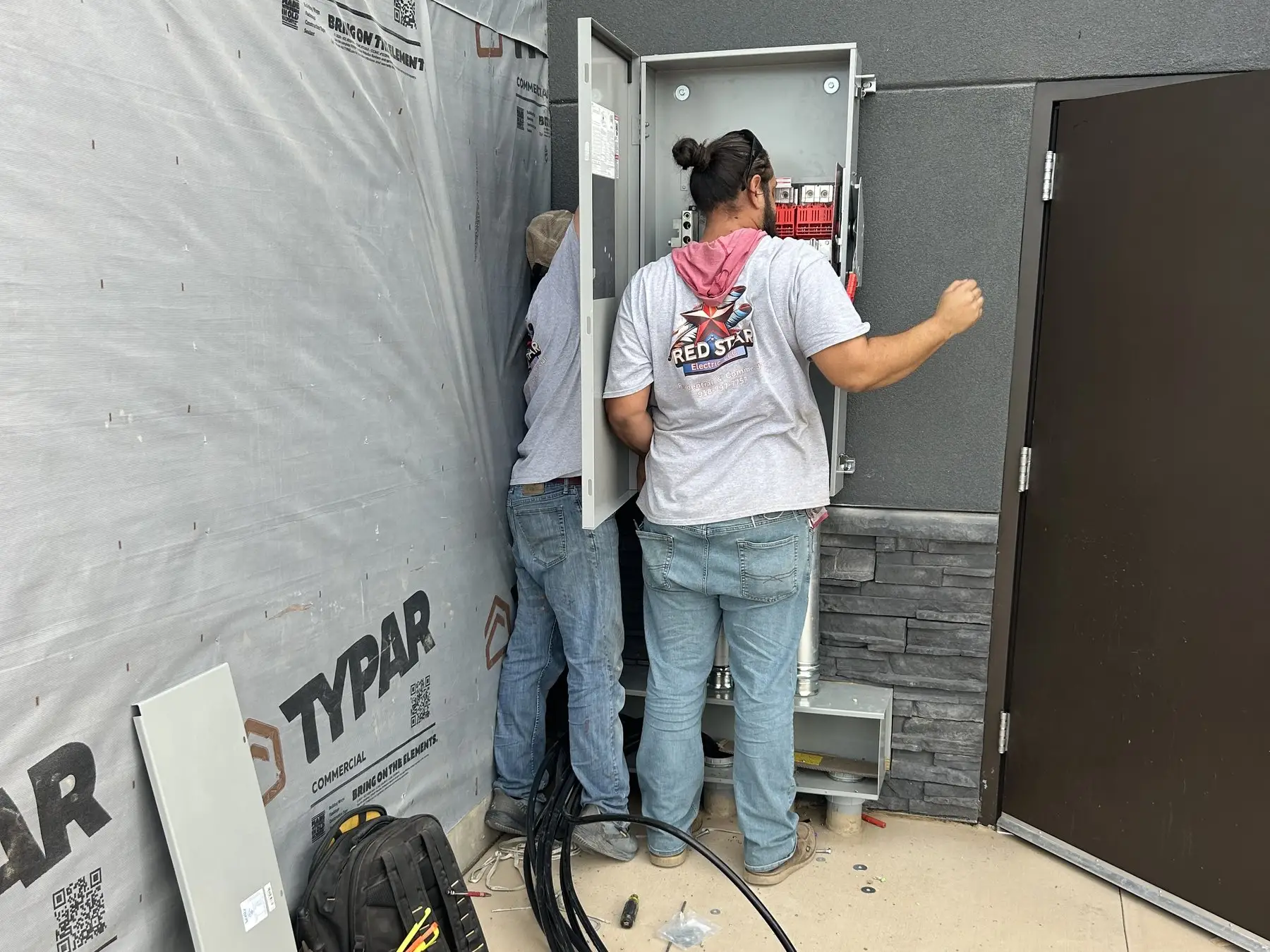
Most people call an electrician for the first time when something has already gone wrong, which is the worst possible moment to be learning how any of it works.
So here is the entire process, written for somebody who has never done it.
When you call
You will talk to the office, not a call center. You will get asked a few things, and none of them are a trap:
- What is it doing? Describe it the way you would to a neighbor. “The bathroom outlets stopped working and the bathroom light still works” is a genuinely useful sentence. You do not need the right words.
- When did it start, and did anything change? New appliance, storm, water somewhere, work done recently. This is often the whole answer.
- Where are you? Because the drive matters to scheduling.
- Is anything hot, burning, sparking, or smelling? If yes, that changes the priority immediately.
You will get told honestly when somebody can be there. Not a slot that sounds good on the phone and quietly slips. If it is not urgent, you can also pick a time on the schedule and the office will call to confirm it.
Before anyone arrives
If it is safe to do so, find your panel and clear a path to it. That is usually a garage wall, a hallway, an exterior wall, or a utility room. If there is a deep-freeze or a shelf of paint cans in front of it, moving that before the truck shows up buys you time you would otherwise pay for.
If a breaker is off, leave it off. Repeatedly resetting a breaker that keeps tripping is asking a safety device to stop doing its job.
When the electrician gets there
The first thing that happens is diagnosis, not repair. Even on something that sounds obvious, the visible symptom is often three rooms away from the cause. A dead outlet in a bedroom can be a failed device in a completely different room, because outlets are commonly wired in a chain.
You will be told what was found and what it will take to fix, before the work happens. If it turns out to be bigger than the call suggested, that is a conversation, not a surprise on an invoice.
What “code” means for you
Work has to meet the electrical code, and sometimes fixing the thing you called about means bringing something adjacent up to standard too. That is not upselling. An electrician who leaves a known violation in place has signed their name to it.
If that comes up, ask for it to be explained. Any tradesman worth having will be able to tell you exactly what the requirement is and why it exists.
Afterwards
You should know what was done and what, if anything, is worth watching. If the repair revealed something larger, like a panel that is at the end of its life, you should get told that plainly along with an honest read on whether it can wait.
Plenty of things can wait. Somebody telling you that is a better sign than somebody who cannot find a thing on your property that is not urgent.
Got one of these going on?
Describe what it is doing. We will tell you whether it needs somebody out there today or whether it can wait.